

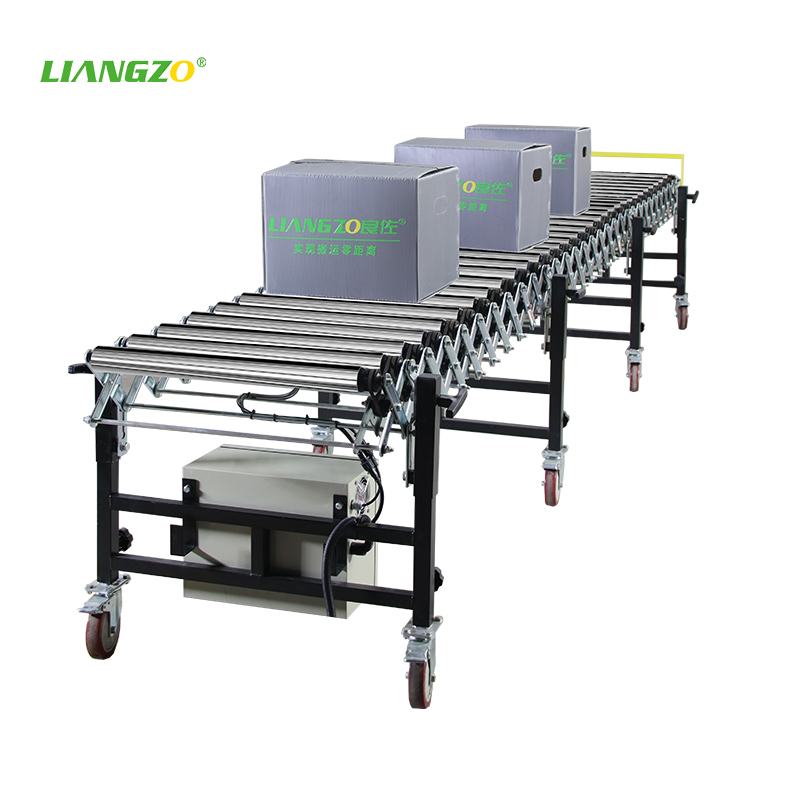
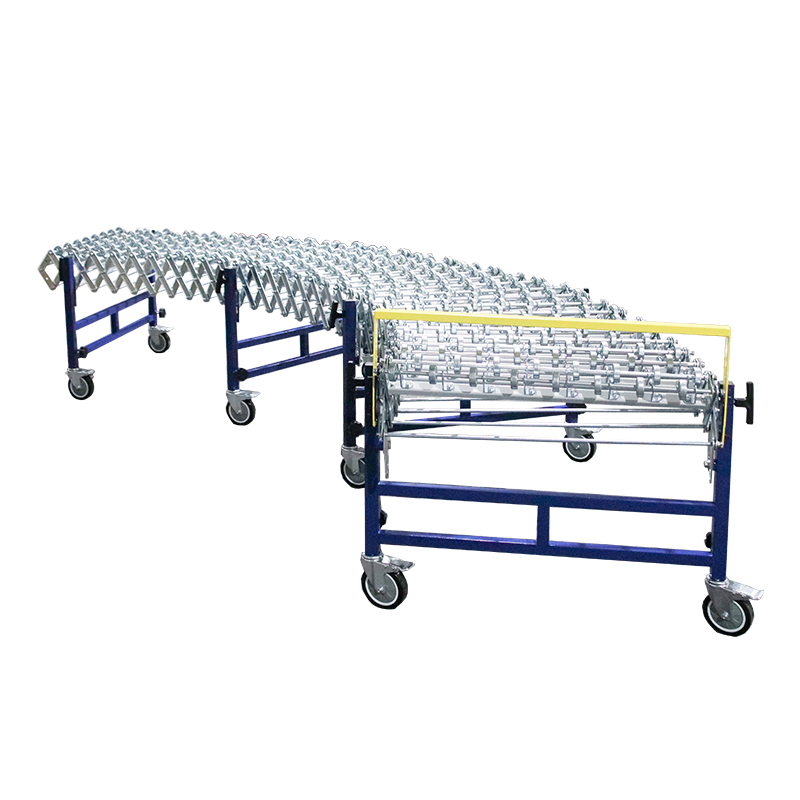
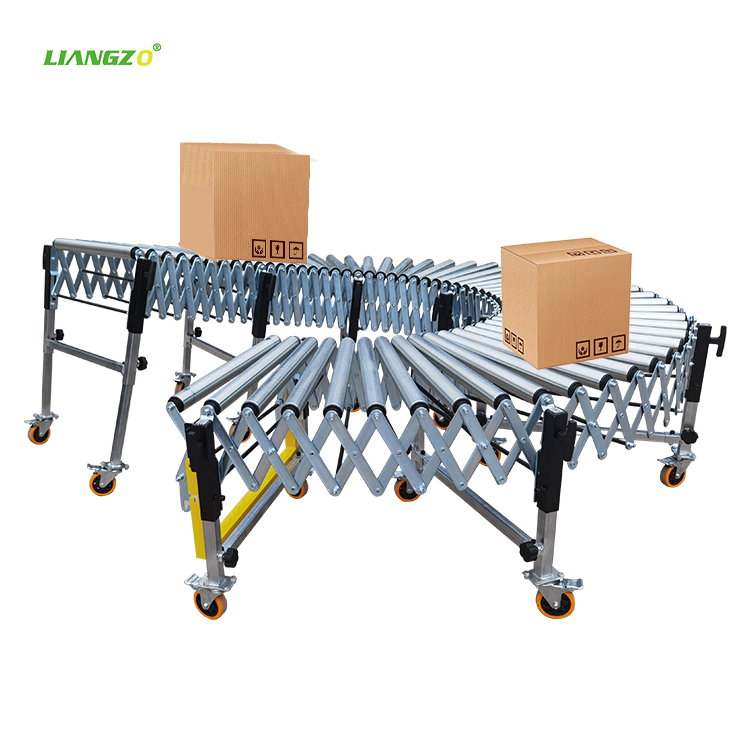
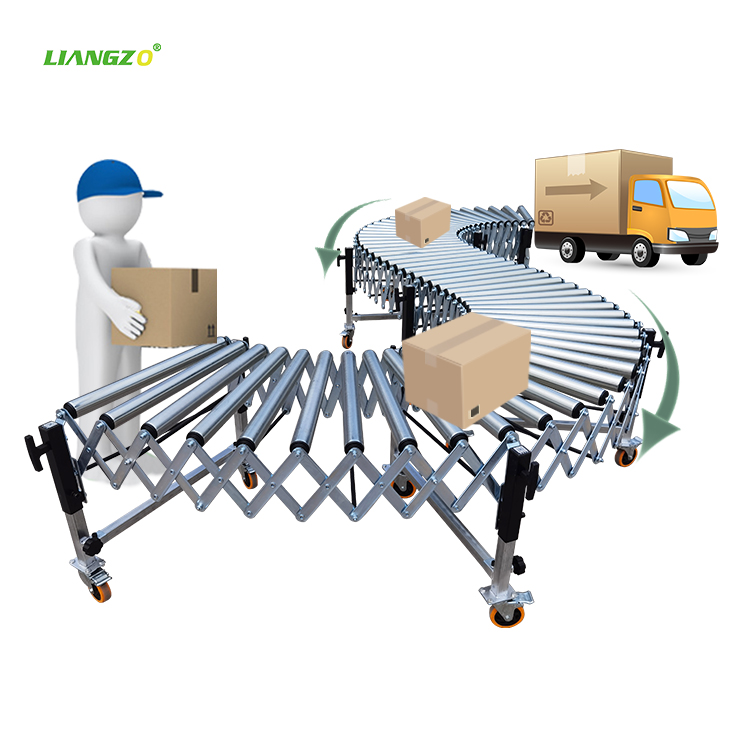
Time is everything in operations. Fixed lines and manual moves cost you both.
Motorized flexible conveyors change that. They bend, extend, and adapt right along with your workflow—keeping goods flowing from trucks to stations, seamlessly and without strain.
Here’s a quick look at how they work, what types are out there, and how they help teams work smarter, not harder.
PART 1: WHAT IS A MOTORIZED FLEXIBLE CONVEYOR? – DEFINING THE NEW ARCHETYPE
1. Modularity & Portability: Constructed from lightweight, high-strength aluminum extrusions, these conveyors feature standardized connection points. They can be linked together in minutes without specialized tools. Integrated heavy-duty casters and locking brakes allow a single worker to roll a 20-foot section into a new position, making the entire system inherently portable.
2. Self-Contained Drive System: This is the core innovation. Every unit houses its own compact, high-torque electric motor, usually coupled with a sealed, maintenance-friendly gearbox. This eliminates the labyrinth of mechanical power transmission components that plague fixed systems, drastically simplifying maintenance and improving energy efficiency.
3. Reconfigurability: This is the superpower. A line configured for outbound parcel sorting on Monday can be broken down and reassembled into an inbound receiving line or a production cell feeder by Friday. This allows facilities to respond to seasonal peaks, new product launches, or process optimization trials with unprecedented speed.
4. Scalability: Systems are inherently scalable. Start with a three-section loop for a pilot project. As demand grows, simply insert additional modules to extend the line. This "pay-as-you-grow" model reduces upfront capital risk and aligns investment directly with operational need.
5. Intelligent Control Readiness: While basic models offer simple on/off switches, modern motorized flexible conveyors are designed for seamless integration into broader automation ecosystems. They come pre-wired for sensors, programmable logic controllers (PLCs), and communication protocols, ready to become smart nodes in an Internet of Things (IoT) network.
In essence, a motorized flexible conveyor transforms conveyance from a static, fixed cost center into a dynamic, adaptable strategic asset.
PART 2: HOW MOTORIZED FLEXIBLE CONVEYORS WORK – DECONSTRUCTING THE MECHANISM
A. The Physical Anatomy: Core Components
The Frame: The skeleton, typically aluminum, provides structural integrity while minimizing weight. Its T-slot or channel design allows for the easy attachment of accessories like guide rails, sensors, and side tables.
The Driving Force – Motor & Gearbox Assembly:
Motor Types: Common choices include robust AC induction motors for constant-speed applications and more advanced, controllable Brushless DC (BLDC) or three-phase AC motors paired with Variable Frequency Drives (VFDs) for precise speed and torque management.
Gearbox: Attached to the motor, it reduces the high rotational speed of the motor to a lower, more useful output speed while multiplicatively increasing torque. Worm gear reducers are popular for their compactness, high torque output, and inherent self-locking capability.
Location: The drive is usually mounted at the conveyor’s discharge end (the "head"). This placement puts the belt or rollers under tension during pulling, which is more efficient and stable than pushing from the "tail" end.
The Carrying Surface – Belt vs. Roller Systems:
Motorized Belt Conveyors: A continuous loop of belt (PVC, polyurethane, rubber) rotates around two pulleys—the powered head pulley and the idle tail pulley. The belt slides over a smooth deck or runs on return rollers. VFDs are crucial here, enabling smooth starts/stops and speed tuning to match process requirements.
Motorized Roller Conveyors: This category has a revolutionary sub-type: the Motorized Drive Roller (MDR). Here, the motor is miniaturized and housed inside the conveyor roller itself. An external, low-voltage DC power supply runs along the frame, connecting to each "smart roller." Alternatively, in a "belt-under-roller" design, a motor-driven flat belt runs beneath the rollers, making contact with and turning them.
The Control System – The Nervous System:
Basic: An onboard control box with a circuit breaker, start/stop buttons, and a speed potentiometer.
Advanced: A network-ready panel with an input/output (I/O) port for connecting photoelectric sensors, zero-pressure accumulation zones, and communication with a central PLC or PC.
B. The Principle of Operation: From Simple Movement to Intelligent Flow
The magic unfolds when individual modules are connected into a system. Consider a shipping zone in an e-commerce warehouse during peak season.
Stage 1: Initiation & Sensing. A box arrives from an upstream sorter. A photoelectric sensor (a "photo-eye") mounted on the first conveyor section detects the package. This sensor sends a signal to that section’s motor controller: "Item present, initiate transport."
Stage 2: Controlled Propulsion. The motor, through the gearbox, begins to turn the head pulley or drive roller. If equipped with a VFD, it ramps up speed gradually for gentle product handling. The box moves down the belt.
Stage 3: Zone-to-Zone Handoff – The Secret to Efficiency. As the box approaches the end of the first section, it breaks the beam of a sensor placed just before the transfer point. This sensor is wired to the control system of the next conveyor section. It triggers a command: "Start Conveyor Section #2." By the time the box reaches the gap between sections, Section #2 is already running at matching speed, ensuring a smooth, non-disruptive transfer. This is zone control.
Stage 4: Accumulation & Queue Management (The Smart Roller Advantage). This is where MDR-based systems shine. In a packing area, boxes may need to queue before a station. Each roller zone (a group of rollers powered by one MDR) has its own sensor.
When a box enters Zone 1, its motor runs.
When the box moves into Zone 2 and blocks Zone 2's sensor, a signal is sent back to Zone 1's motor: "Stop." Zone 2’s motor keeps running to hold the box in place.
A new box arriving in now-empty Zone 1 will travel until it reaches the stopped box in Zone 2, at which point Zone 1 stops again.
When the packer removes the lead box from Zone 2, its sensor clears, sending a "start" signal back to Zone 1. The queue advances smoothly. This creates zero-pressure accumulation—products queue without touching and without back-pressure forces that can cause damage or jams. This is impossible with a single, continuously running drive shaft.
C. Advanced Functionality: Diverting, Merging, and Lifting
Flexible conveyors form the basis for complex material handling tasks:
Diverting: A pop-up wheel diverter or a swinging arm diverter can be mounted between sections. When a scanner reads a barcode on a box, it signals the diverter to activate at the precise moment, nudging the box onto a perpendicular spur line made of more flexible conveyor modules.
Merging: Two conveyor lines can feed into one using a merge unit. Sensors and controls coordinate the releases from the infeeds to prevent collisions on the main line.
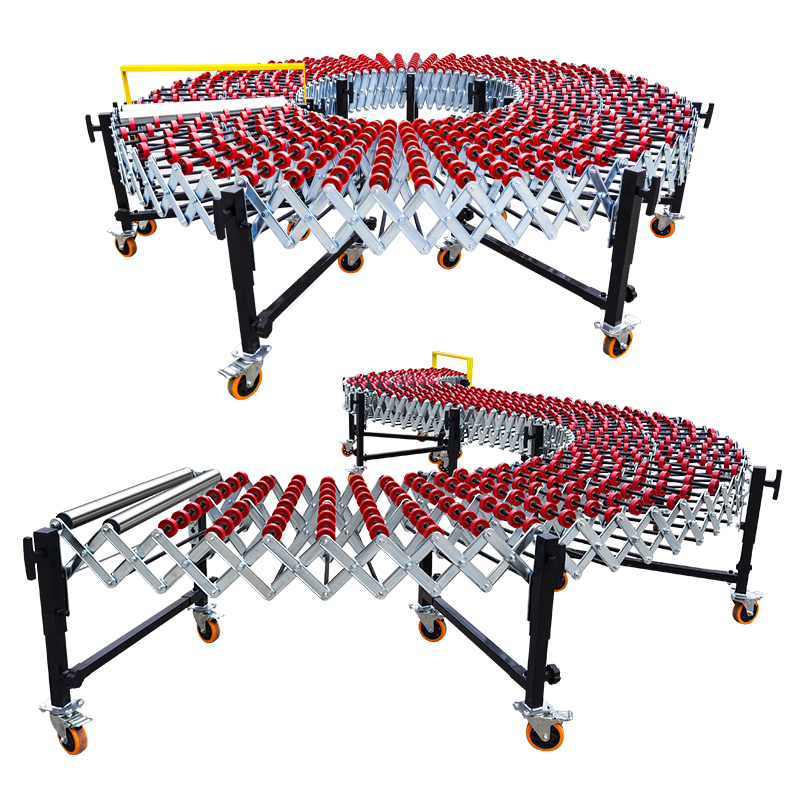
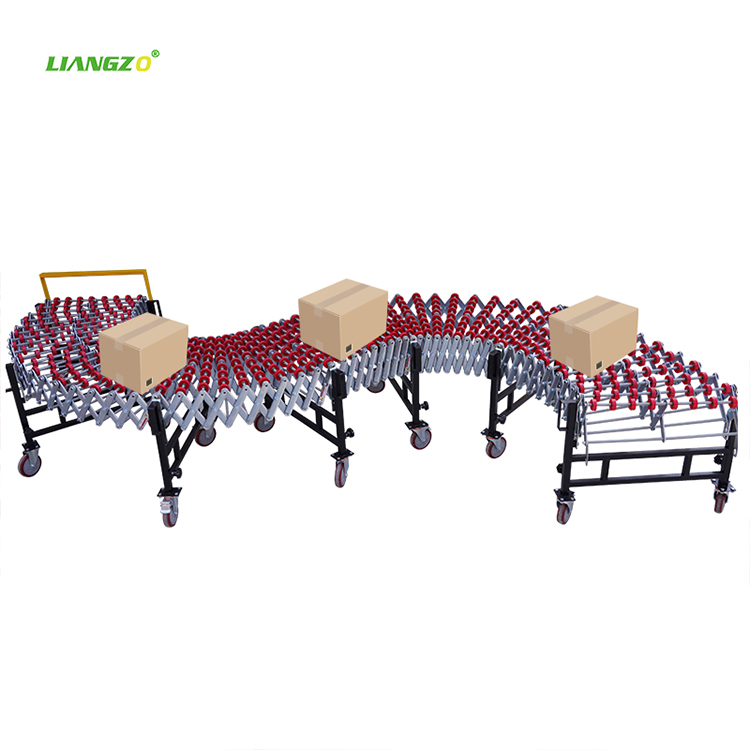
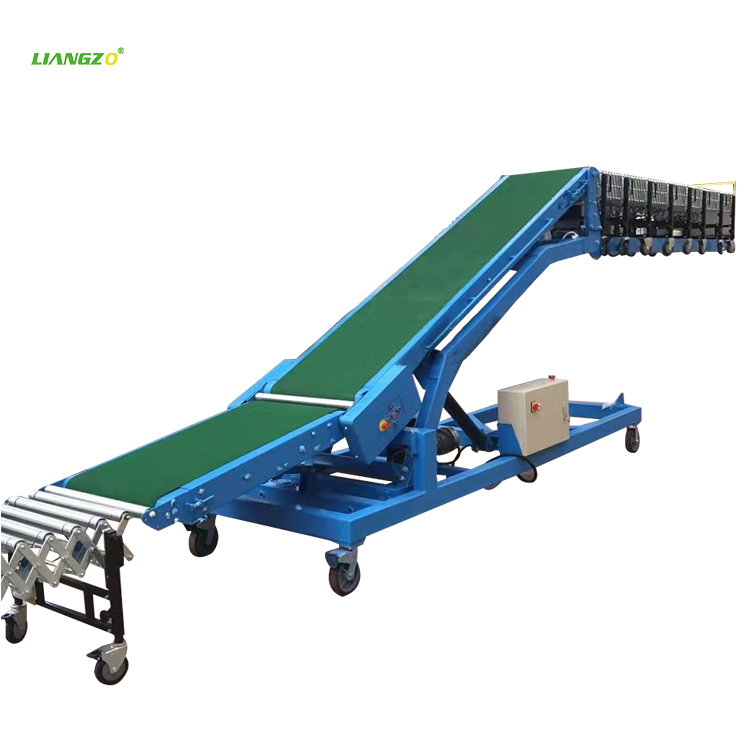
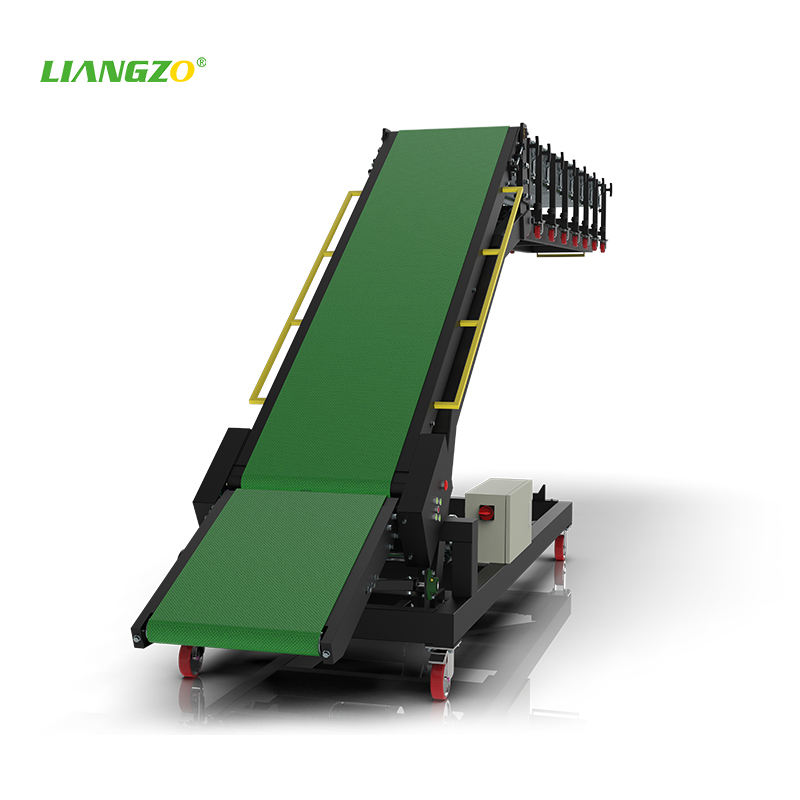
Vertical Motion: While primarily horizontal, flexible conveyor concepts extend to portable, motorized flexible gravity feed spiral conveyors or extendable conveyor booms for truck loading, which use the same modular, powered principles to move products up, down, or over obstacles.
PART 3: THE TRANSFORMATIVE IMPACT – APPLICATIONS ACROSS THE INDUSTRIAL SPECTRUM
The versatility of this technology has led to its proliferation across diverse sectors:
E-Commerce & Omni-Channel Fulfillment: The quintessential use case. They create temporary sortation "pop-up" networks in distribution centers, handle volatile parcel volumes at carrier hubs, and automate the "pick-to-cart" and packing processes. Their ability to scale up for Cyber Monday and scale down in January is invaluable.
Air Cargo & Airport Baggage Handling: For rerouting luggage around maintenance areas, creating temporary check-in lines, or handling overflow during flight delays, flexible conveyors provide critical operational resilience without permanent airport modifications.
Automotive & Advanced Manufacturing: In assembly plants, they are used for kitting operations—bringing precisely sequenced parts to a workstation. Their reconfigurability is perfect for low-volume, high-mix production or pilot assembly lines for new vehicle models.
Food & Pharmaceutical Processing: Constructed from stainless steel with USDA/FDA-compliant materials, washdown-rated flexible conveyors allow for quick line changes between product runs and easy deep cleaning, meeting stringent hygiene protocols.
Postal & Parcel Centers: They modernize legacy facilities, automating mail flow from sacks to sorters to dispatch cages, adapting to the daily mix of letters, flats, and packages.
Retail & Cross-Docking: In distribution centers, goods are moved directly from inbound trucks to outbound docks with minimal storage. Flexible conveyors create the temporary "highways" needed for this fast-paced transfer.
